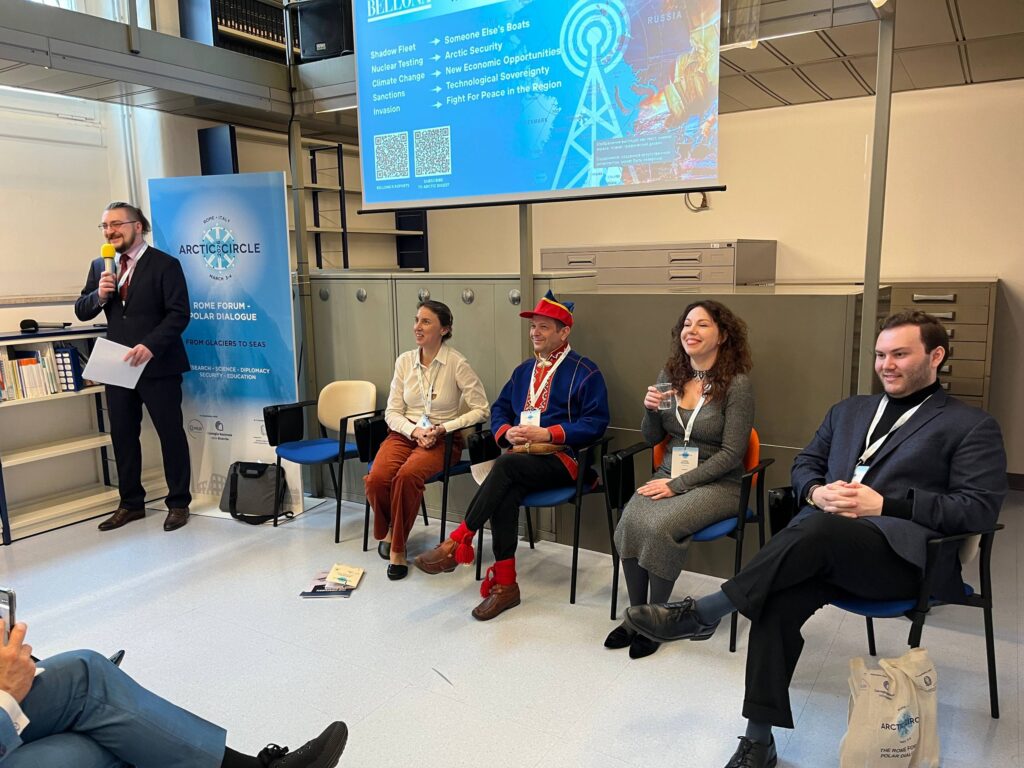
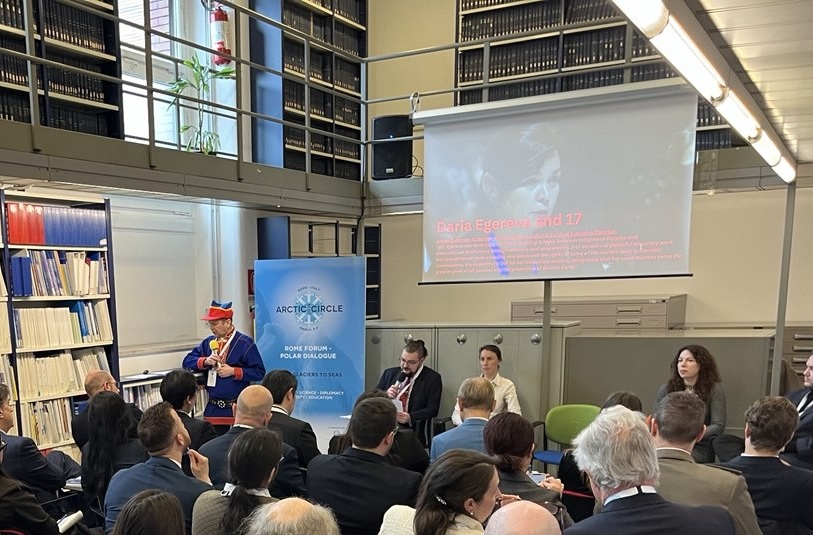
On 4 March 2026, within the framework of the Arctic Circle Rome Forum, a discussion organized by the Bellona Environmental Transparency Center took place, focusing on Russian disinformation in the Arctic and its impact on the environmental agenda, international decision-making, and security in the region.
ICIPR took part in the event: among the speakers was Andrei Danilov, a Sámi activist and a member of the International Committee of Indigenous Peoples of Russia (ICIPR).
http://etc.bellona.org/event/bellona-arctic-circle-rome-2026/
The Impact of Russian Propaganda on the Indigenous Peoples of the Arctic
04 March 2026 Rome, Italy
Russian authorities actively use propaganda and control over public organizations to shape a preferred narrative on Indigenous rights in the Arctic. Instead of supporting Indigenous interests, the state seeks to monopolize their representation internationally while suppressing independent activism at home.
A central role in this process is played by RAIPON (the Russian Association of Indigenous Peoples of the North, Siberia and the Far East) — an organization that once defended Indigenous rights but has since turned into a state-controlled structure — a so-called GONGO (government-organized non-governmental organization).
This report explains how Russian propaganda, working through organizations such as RAIPON, distorts reality, spreads misleading information in international forums, and negatively affects the lives of Arctic Indigenous peoples.
RAIPON: From defense of rights to propaganda
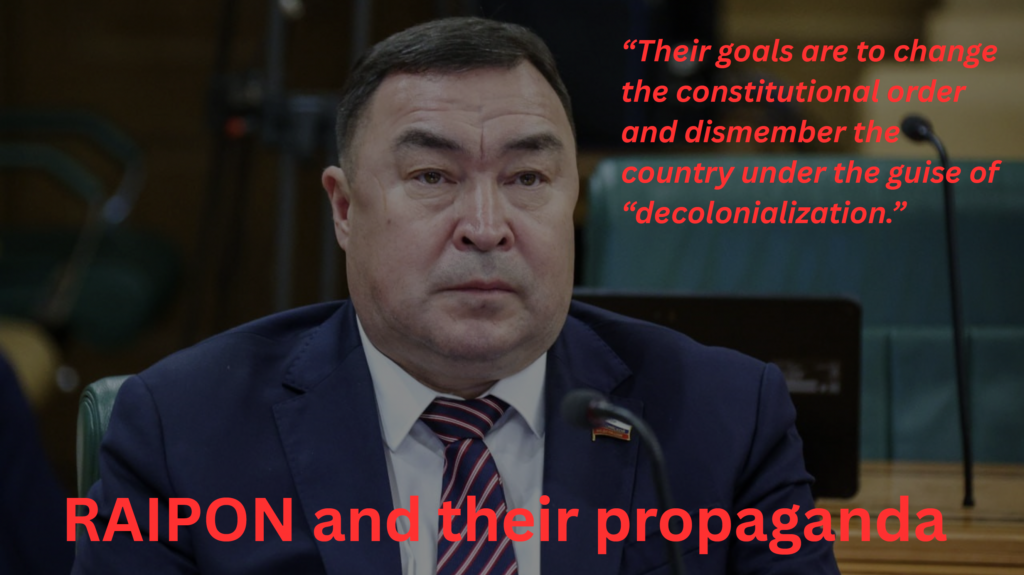
RAIPON presents itself as a nationwide association representing 40 Indigenous peoples of the North, Siberia, and the Far East of Russia. In recent years, however, it has lost its independence and effectively become a vehicle for Kremlin policy.
Key milestones in RAIPON’s transformation into a tool of state propaganda include:
2013: RAIPON’s leadership was replaced with figures loyal to the Kremlin; the organization lost its institutional independence.
2022: RAIPON publicly supported Russia’s military invasion of Ukraine, thereby abandoning its stated commitment to Indigenous rights.
Present: RAIPON’s leadership maintains close ties with state institutions and follows the official “party line” rather than the real needs of Indigenous communities. The organization promotes Kremlin initiatives even in regions far removed from Arctic issues, demonstrating full political loyalty.
As a result, RAIPON no longer represents Indigenous interests but functions as a mouthpiece for official propaganda. Its presence in international bodies now serves as cover for domestic human rights violations. According to Dmitry Berezhkov, head of the International Committee of Indigenous Peoples of Russia (ICIPR), RAIPON’s participation in the Arctic Council effectively legitimizes the Kremlin’s position and helps obscure rights violations inside Russia.
Propaganda for the international stage
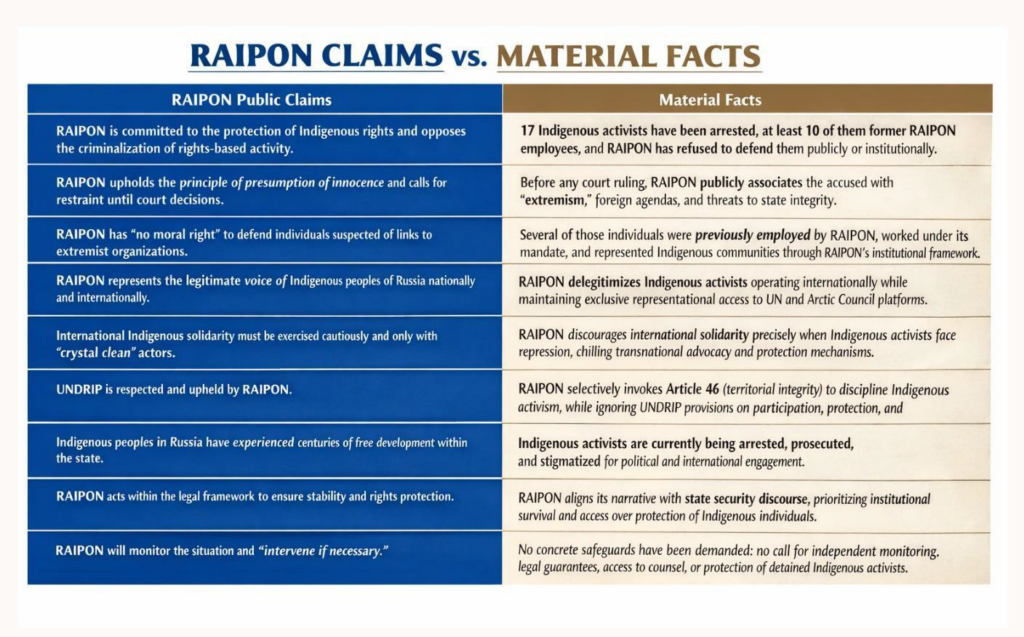
Russian propaganda efforts aim to project an image of Indigenous well-being in Russia at the global level, replacing reality with official narratives. GONGO structures like RAIPON play a key role by speaking at international events on behalf of all Indigenous peoples of Russia and promoting state-approved talking points.
RAIPON remains a permanent participant in the Arctic Council. In this capacity, it diverts attention from domestic problems by redirecting focus toward Indigenous rights issues in other countries. Russian diplomacy often employs a “what about you” tactic — publishing reports about violations abroad to deflect scrutiny from its own policies.
This is a form of soft power strategy: independent activists face intimidation and arrest, while international platforms are filled with representatives loyal to the state and corporate interests.
At UN forums, RAIPON representatives frequently seek to discredit independent Indigenous leaders. For example, at the UN Permanent Forum on Indigenous Issues in April 2023, a RAIPON delegate urged participants “not to listen to people who left Russia long ago … and speculate about the situation in the country.” He advised trusting only organizations operating within Russia and dismissed exiled voices as offering “unfounded criticism” of Russian policy.
In effect, RAIPON argues that only state-controlled voices should be considered legitimate, while leaders forced into exile should be ignored — an attempt to monopolize Indigenous representation internationally and replace it with an official version.
Notably, even the language of international law is used by RAIPON in a distorted way. In response to the December arrests of activists, RAIPON cited the UN Declaration on the Rights of Indigenous Peoples not to defend Indigenous communities, but to justify its own inaction — placing loyalty to the state above human rights. A rights-protection instrument is thus turned into a tool of suppression, undermining trust in international norms.
Persecution of activists and RAIPON’s response
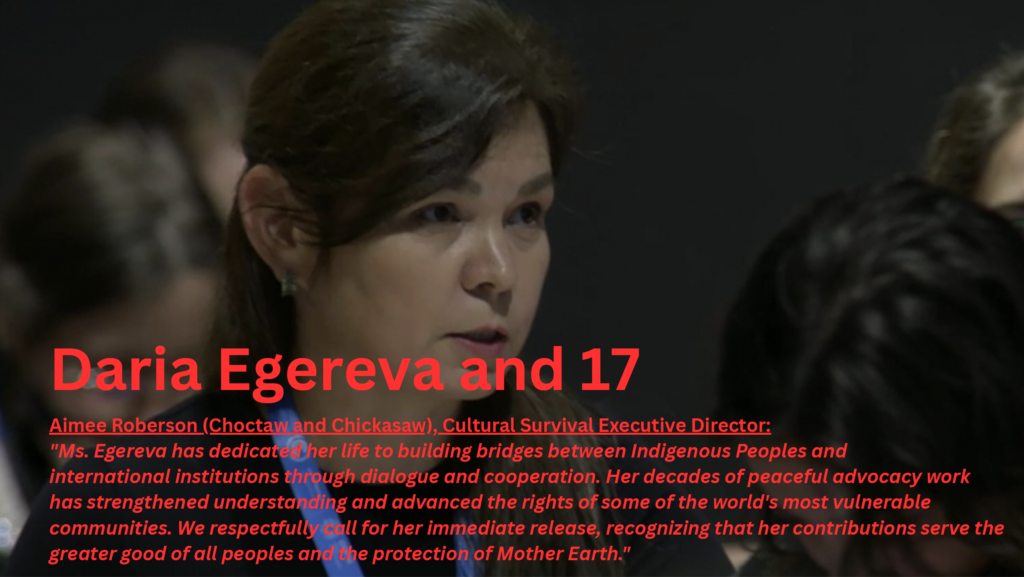
While RAIPON delivers reassuring reports abroad, conditions for independent Indigenous representatives inside Russia are becoming increasingly dangerous. Repression escalated with a coordinated wave of searches and detentions on December 17, 2025.
Security forces conducted simultaneous raids across multiple regions — from Moscow and St. Petersburg to Altai, Yakutia, and Murmansk region. At least 17 Indigenous activists were detained, many of whom had worked with UN mechanisms on environmental and human rights concerns affecting their communities.
Most were later released, but two women — including Selkup human rights defender Darya Egereva — were placed in pretrial detention on extremism charges.
Authorities justified the crackdown with allegations of “extremism” and “terrorism,” claiming links to an organization previously designated extremist. Human rights defenders state that the cases are fabricated and that the real motive is punishment for peaceful advocacy and cooperation with the UN. In today’s Russia, raising Indigenous rights concerns internationally has effectively been criminalized.
The personal stories are telling. Valentina Sovkina, a Sámi activist from the Kola Peninsula and member of the UN Permanent Forum, spent years defending Indigenous land rights and criticizing industrial encroachment. After a lengthy search of her home on December 17, she left Russia for Norway two days later. “If I had stayed, anything could have happened. By leaving, at least I keep my voice,” she explained.
Another example is Selkup activist Darya Egereva, who spoke at the UN climate conference (COP30) in November 2025 about the destruction of her people’s traditional way of life due to state-backed industrial projects. A month later she was arrested on terrorism charges and now faces a long prison sentence for openly defending her community’s rights.
Against this backdrop, RAIPON’s conduct appears especially unprincipled. The association might have been expected to defend those detained — particularly since at least ten of them had previously worked within RAIPON structures. Instead, the organization remained silent. When it finally spoke, it publicly distanced itself, stating it had “no moral right” to defend them — effectively abandoning former colleagues before trial.
An organization established to represent Indigenous peoples refused them support at their most vulnerable moment, placing loyalty to authorities above its own mandate. As independent observers note, a body that sacrifices its people for its own survival ceases to be their true representative.
Consequences for indigenous peoples
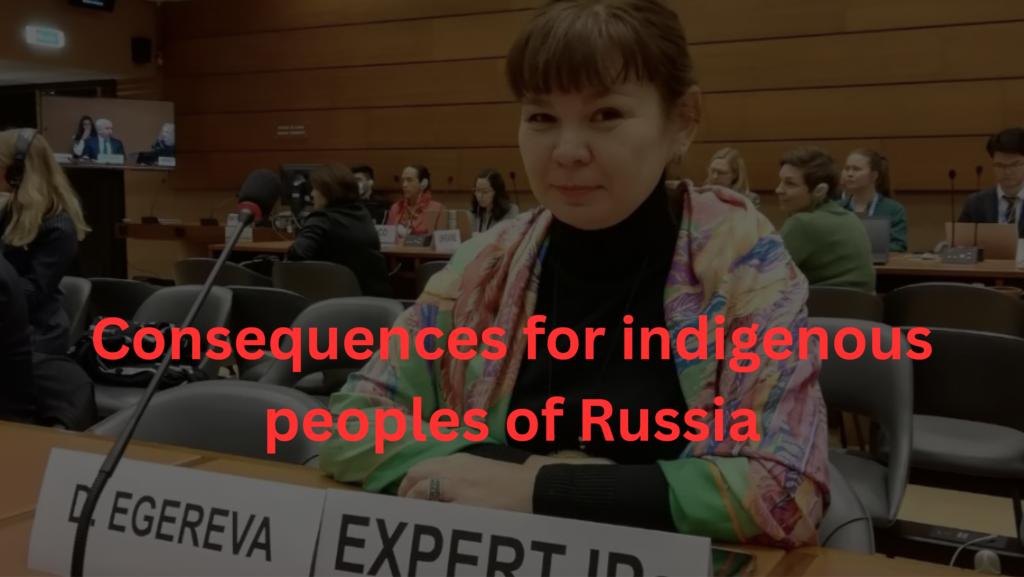
The combined effect of state propaganda and state-aligned organizations carries serious consequences for Arctic Indigenous peoples.
First, reality itself becomes distorted. Official statements portray stability and success, while on the ground communities face worsening conditions — industrial pollution, restrictions on traditional hunting and fishing, and the erosion of languages and cultures. Independent voices raising these concerns are labeled extremist. Urgent problems go unresolved while community conditions deteriorate.
Second, trust within Indigenous communities erodes. When the only officially recognized organization becomes an arm of the state, independent leaders are forced into silence or exile. Trusted voices are either suppressed or replaced with propaganda messaging. Collective rights advocacy becomes harder to sustain.
Third, a crisis of representation emerges internationally. Experts warn that global rights institutions risk being compromised if state proxies, rather than genuine representatives, occupy international platforms.
Finally, real people suffer — language keepers, cultural carriers, defenders of ancestral lands. Their persecution threatens not only individual lives but the future of entire peoples. When propaganda brands such figures as enemies and strips them of voice, communities lose their strongest advocates.
Conclusion
RAIPON’s transformation into an extension of state propaganda, combined with recent repression of Indigenous activists, demonstrates the dangerous impact of official policy on Arctic Indigenous peoples. Dialogue and support have been replaced by monopolized representation and the criminalization of dissent.
It is essential for the scientific and international community to recognize the reality of the situation. RAIPON’s statements cannot be accepted at face value; they are shaped by censorship and political pressure. Support should go to independent Indigenous initiatives — those that genuinely represent their communities rather than state interests.
When propaganda seeks to rewrite reality, solidarity and truthful information become critical. International institutions must look more carefully at who claims to speak for Russia’s Indigenous peoples and call out cases where polished rhetoric conceals rights violations.
Only by exposing falsehoods and amplifying authentic Indigenous voices can the destructive effects of propaganda be countered and the rights, dignity, and cultures of Arctic Indigenous peoples be protected.