
Dear friends,
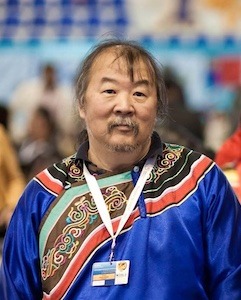
Many of you have already seen the discussions on social media related to the serious accusations against Mark Zdor. Over the past few days, I, as a member of the Committee, have received many questions about what happened and how it relates to our collective work.
It is not easy for me to write this text because it concerns the pain of specific individuals, my personal responsibility, and the possible future of our work. But I understand that I must explain my role in what happened and why I made the decisions I did. I will try to describe as fully as possible how events unfolded.
First of all, I want to address the two women whose personal experiences have become the focus of public attention. I am sincerely sorry that you had to revisit these events and that the past few days may have been especially difficult for you. I respect the fact that you chose to speak publicly about what you went through, and I understand how difficult such a step can be.
I also want to state that I am categorically opposed to any form of violence or violation of personal boundaries. It is especially painful for me that this situation concerns women from Indigenous peoples of Russia, who already live under enormous pressure. Indigenous women have long been at heightened risk and have faced violence perhaps more often than anyone else — something I know from many years of work both in Russia and at the UN.
This is why everything happening now feels so painful — and why it is so important to speak about it openly.
In 2022, two women — one of them a representative of a small-numbered Indigenous people of Russia — approached me asking for help relocating to the United States from one of the countries neighboring Russia, where they had ended up after the war began and where they felt unsafe. I immediately contacted Dartmouth College, with which I had been collaborating, explained the situation, and asked them to consider providing assistance. My colleagues at the university did everything they could to help, and I want to express my gratitude to them.
In the autumn of 2022, when their move to the U.S. was already becoming a reality, they wrote in a group chat — created to coordinate their relocation — about what had happened in Tbilisi. At that time, I did not know Mark personally and was not involved in arranging his relocation. As I later learned, another university had been working with him, and the American colleagues handling Mark’s case decided to stop the process. A phrase attributed to me in Victoria Molodayeva’s post — that “in America Mark could repeat violence against some American woman” — is not true; I have never said anything of the sort.
After the women arrived in the U.S., we became friends and stayed in close contact — meeting at conferences, discussing personal and work-related matters. I visited them when I travelled to Dartmouth College. They did not raise the topic of what happened in Tbilisi.
The women brought up the issue of Mark with me after learning that he had been accepted as a member of ICIPR. At that point, I told them that I had spoken with Mark and that he described the events differently, and that the Georgian police had declined to initiate a criminal case, stating there were no grounds for doing so. I said then that questions of justice must be resolved within formal structures, since the participants described what happened in very different ways, and Mark told me that the police had found no legal basis for proceeding.
At that time, it seemed to me that since I knew about the situation only from the accounts of the women and Mark, I did not have the right to disclose it further without their explicit consent, so as not to cause them harm. I believed then that such matters belonged to a very personal sphere and that individuals themselves should decide whether they want to bring them into public or formal settings. I felt that if someone was not ready to speak publicly, I had no right to act on their behalf. I now understand that in cases involving violence, this approach is insufficient.
Later, we remained in regular contact with the women (up until the publication by Sota Project), wrote to each other about personal and professional matters, discussed future plans, and the issue of Mark did not arise during that period.
In 2024, Mark created a youth working group for Indigenous peoples. One of the women was invited to join (and she knew Mark was the coordinator). Their communication took place in a work format — they discussed joint projects and youth initiatives. At that time, I assumed they did not wish to revisit the earlier situation. Now I see that this was a mistaken conclusion. I did not have sufficient experience with situations like this and did not fully understand how to respond when dealing with trauma of this kind.
In April 2025, during the conference on Orcas Island — where I was scheduled to open the meeting — Elena Kostyuchenko approached me and said that one of the women felt extremely distressed by Mark’s participation and asked that he be removed from the program. We immediately removed Mark from the conference agenda — at that moment, it seemed like the best immediate step to avoid further distress.
In her post, Victoria Molodayeva claims that I pressured the women and that they supposedly “had to apologize” because of what happened. This is not true. During the break on the first day, one of the women approached me and said: “I didn’t expect that my friend would react this way. Elena saw it, understood what happened, and approached you.” I told her that it would have been easier if they had simply come to me before the meeting started — we could have removed Mark right away. She then asked whether I was upset with them. I said no. Any claim that I pressured them is false; my attitude toward them did not change. For example, in the summer of 2025 I invited both women to join the delegation of Indigenous peoples to New Mexico; they were enthusiastic, and we openly and warmly discussed their participation.
In the autumn of this year, the Committee organized a conference in Berlin. Mark participated as one of the speakers; the women were not participants in that event. During the preparation phase, an employee of Sota Project requested to join the conference. We discussed this at length, as we were aware of the questionable reputation of this outlet, but ultimately approved their participation by majority vote. I participated in the event online, while those physically present were mostly Committee members based in Europe.
On the evening of the first day, Sota Project published an article about Mark. Naturally, the information presented raised concerns among Committee members, though Mark disputed its accuracy.
The Committee decided to convene the following week to discuss the accusations and develop a response to the questions members were receiving. On 3 December, during a working meeting, we learned that shortly before the conference one of the women had spoken privately with Committee member Yana Tannagasheva and, for the first time, told her about the events in Tbilisi in 2022. Yana also understood this conversation as personal and private, not as a request to raise the issue publicly or bring it before the Committee.
That same day, Victoria Molodayeva published her post containing the women’s account and the Georgian police protocol. At the meeting, Mark faced serious questions. We discussed the situation, acknowledged that we had significant gaps in our understanding of how to handle such cases, and adopted the Committee’s official statement. We also decided to suspend Mark from all ICIPR activities, remove him from ICIPR’s working bodies, and develop and adopt an Anti-Harassment Policy. ICIPR published this statement the next day.
Now — about my responsibility.
What I want to emphasize most is that I have always believed difficult matters of public life should be discussed openly, and I have never attempted to conceal anything, unless it involved someone’s private information. At the time, I believed the women had the right to decide themselves whether to go to official structures, discuss the matter with others, or keep it private. They never asked me to publicize what had happened to them or raise it with anyone else.
Now I see that this was not enough. I should have sought professional guidance, raised the issue within the Committee, and acted based on modern standards of safety and response. We eventually did so, but unfortunately too late, and I accept personal responsibility for that. I also want to apologize to my fellow Committee members for not informing them sooner.
I also want to address the public reaction. In recent days, individuals who had no knowledge of the situation have come under pressure. Some of my colleagues — including Indigenous women — have faced insults and accusations solely because they belong to the organization. This has caused them deep pain, and it is unfair. It is essential that discussions of violence or women’s rights do not lead to new forms of pressure on people who are themselves vulnerable or uninvolved.
I am also willing to give an open interview to any responsible media outlet prepared to approach this matter seriously rather than for the sake of scandal, and to answer the questions raised by recent publications and commentary.
Finally, to ensure full openness and transparency, at the next ICIPR meeting I will propose inviting independent, widely recognized experts — specialists in sexual violence, survivor support, safe environments, as well as legal and conflict-resolution experts. These must be individuals with impeccable reputations, with no ties to me, Mark, or ICIPR. I believe it is essential that such an external and authoritative group examine all available materials, assess the situation objectively, and provide recommendations. Once this independent review is complete, I am ready to discuss my future role within ICIPR and will insist that the findings be made public.
Thank you to everyone who has maintained humanity during these difficult days.
Pavel